
The high-pressure (HP) pump is a key component of modern Diesel and direct injection petrol systems. A failure in this pump can cause hard starting, loss of power, engine misfires, or even severe engine damage if not detected in time. Thanks to tools like HaynesPro, mechanics can perform fast and accurate diagnostics, avoid costly repairs, and ensure vehicle safety.
Symptoms of a Failing High-Pressure Pump
Identifying signs of wear or malfunction is essential. Below are the most common symptoms:
- Hard or failed starting
Insufficient pressure in the fuel rail prevents the engine from starting properly. - Engine hesitation or power loss
Injectors are not receiving enough high-pressure fuel, leading to jerking or reduced torque. - Check Engine Light (MIL) illuminated
Diagnostic trouble codes related to fuel pressure or injectors (P0087, P0190, P0193…) appear in the OBD-II scan. - Fuel leak around the HP pump
Over time, high-pressure seals and fittings can develop leaks. - Unusual engine or pump noise
Knocking or whistling sounds may indicate early internal wear. - Irregular rail pressure
Readings from a diagnostic tool show abnormal or insufficient fuel pressure fluctuations.
Step 1: Data Collection with HaynesPro
HaynesPro provides quick access to precise OEM information, including:
- Fuel rail pressure values and manufacturer thresholds
- Electrical diagrams and injection system schematics
- Test procedures for the pump and injectors
With this data, the mechanic can verify whether the pump operates within manufacturer tolerances or requires replacement.
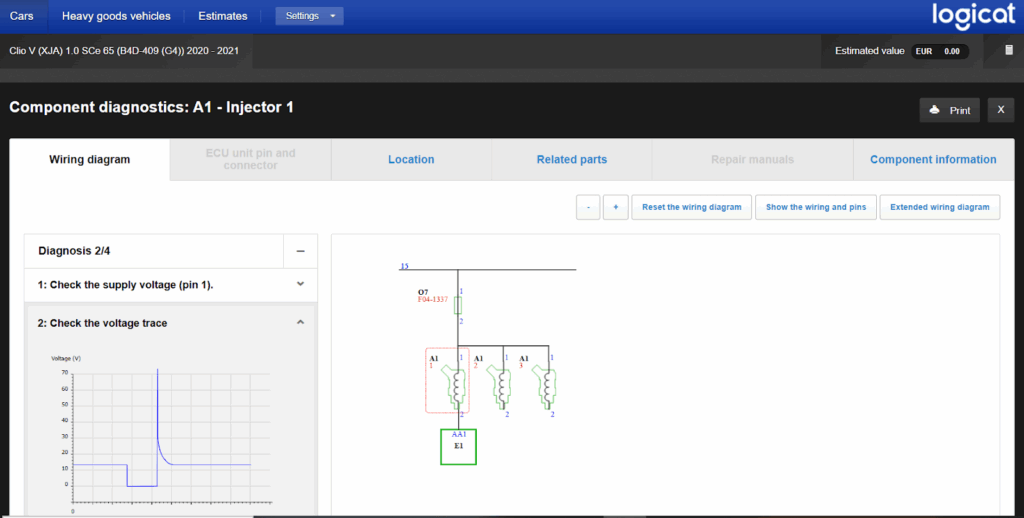
Step 2: Expert Diagnostic Process
- Check fuel and filters: Assess fuel quality, check for air in the system, and inspect for clogged filters.
- Measure rail pressure: Use a high-pressure gauge or OBD-II diagnostic tool.
- Inspect injectors: A faulty injector can overload or disrupt the HP pump.
- Test the HP pump: Examine solenoids, the pressure regulator, seals, and internal wear.
Step 3: Possible Solutions
- Clean or replace injectors if necessary.
- Replace the fuel filter and bleed the system to prevent cavitation.
- Replace the high-pressure pump if readings are out of range or wear is confirmed.
- Perform ECU calibration and adaptation after replacement to ensure optimal performance.
Tips for Mechanics
- Always refer to HaynesPro for accurate manufacturer values before any intervention.
- Check fuel quality and supply lines before replacing the pump.
- Document all diagnostic steps to justify the intervention to the customer.
The high-pressure pump is a critical element in modern engines. A misdiagnosed failure can lead to costly repairs and extended downtime. Using HaynesPro, mechanics gain access to OEM data, schematics, and test procedures to perform quick, reliable, and safe diagnostics.
An expert diagnosis combined with targeted repair actions helps prevent major failures, optimize workshop time, and enhance customer satisfaction.
Do you want to diagnose vehicles like an expert?
Try HaynesPro for free today and get access to complete OEM data, technical diagrams, and diagnostic procedures for all your repairs.