
A check engine light at sea… should you panic?
Many assume a marine engine fault code signals a major failure. In reality, it’s mostly informational. Proper interpretation allows quick action and prevents damage.
Overview: marine engine fault codes
Marine engines operate in harsh conditions – humidity, salt, long hours. Fault codes are frequent, and time is crucial at sea.
⏱ Time required: 20–40 minutes
⚙️ Difficulty: Easy to intermediate
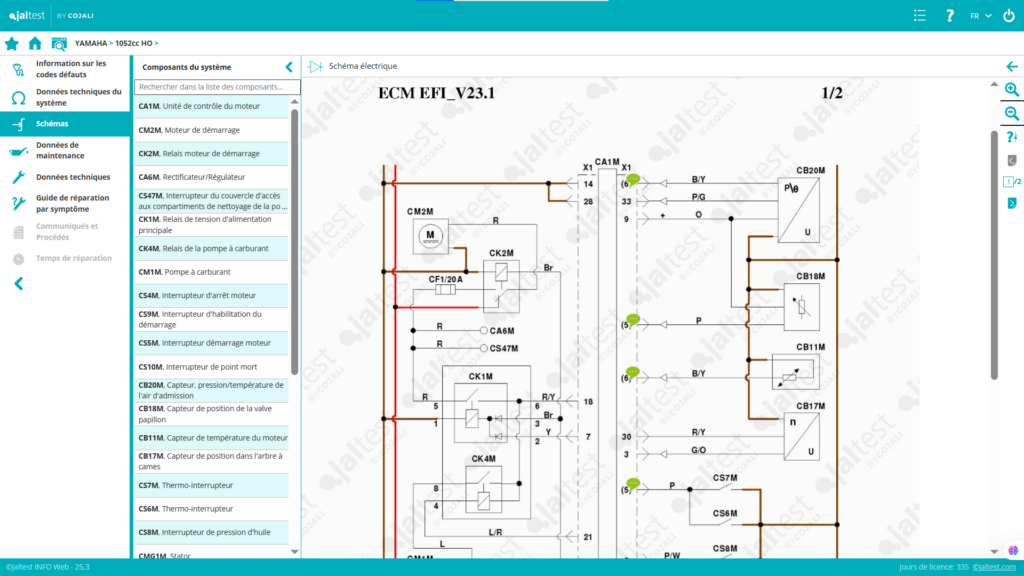
Jaltest INFO Web provides clear explanations, possible causes, and manufacturer-recommended procedures.
Essential ingredients for diagnosis & repair
- Jaltest INFO Web: marine technical platform
- Computer/tablet
- Standard tools: multimeter, wrenches, measuring devices
- Analysis time
- Safe environment: engine off, ventilated area
🔁 Substitutions & variations: Code meanings vary by brand, inboard vs. outboard. Jaltest INFO Web adapts info.
Step-by-step interpretation
- Identify the code – Record it and look it up in Jaltest INFO Web.
- Understand the possible cause – Sensor, temperature, pressure, or supply issue.
- Check affected components – Inspect connections, sensors, hoses; compare values with technical data.
💡 Marine tip: Start with simple checks before complex repairs.
Assembly & validation
After checks, ensure everything is secured and protected from moisture. Gradual testing prevents surprises.
Storage & preparation
Keep tools and technical documents dry. Prepare info before heading to sea for faster troubleshooting.
Mechanical variations
Cooling and injection systems differ by engine type. Jaltest INFO Web guides adaptation to configuration and marine conditions.
Conclusion
Interpreting marine engine codes is methodical, not luck. With Jaltest INFO Web, diagnosis and repair are faster, clearer, and safer.
👉 Try Jaltest INFO Web free demo and simplify marine engine diagnostics today.