
Adaptive air suspension improves ride comfort, handling, and vehicle stability through continuous electronic control of the ride height. The system relies on height sensors, a compressor, solenoid valves, and a control unit that automatically adjusts the pressure in the air springs. After replacing a sensor, an air strut, a suspension arm, or even after a wheel alignment, precise height sensor calibration is essential. Incorrect calibration can lead to improper ride height, premature component wear, or the vehicle entering limp mode. With HaynesPro, technicians have access to a complete diagnostic methodology, OEM calibration procedures, and manufacturer specifications required to perform accurate and compliant calibration.
Symptoms of a Miscalibrated or Faulty Air Suspension
The most common symptoms observed in the workshop include:
- Vehicle leaning to one side
Incorrect height sensor calibration or air spring leakage. - “Suspension Fault” dashboard message
- Common fault codes: C104807, C156C00, U111300, C1517F0.
- Incorrect ride height after repair
Sensors not recalibrated after suspension component replacement. - Compressor running continuously
Continuous correction attempt due to incorrect height values. - Limp mode activation
The control unit disables certain functions to protect the system. - Reduced ride comfort
Incorrect pressure distribution in the air springs.
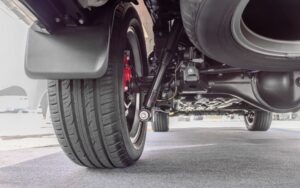
Step 1: Data Collection with HaynesPro
HaynesPro provides quick access to:
- Complete air suspension system diagrams
Height sensors, valve block, compressor, control unit, and electrical supply. - OEM manufacturer values
Reference ride heights, tolerances, and calibration values. - Guided calibration procedures
Exact preconditions: tire pressure, fuel level, vehicle position, battery voltage. - Detailed diagnostic procedures
Fast identification of electrical, mechanical, or pneumatic faults. - Precise component location
Simplified access to height sensors and manufacturer measurement points.
HaynesPro Case Study: Audi Q7 3.0 TDI quattro
Symptoms
- Vehicle leaning to the rear right.
- “Adaptive Air Suspension Fault” message displayed.
- Frequent compressor operation.
- Fault code C156C00 – Incorrect ride height calibration.
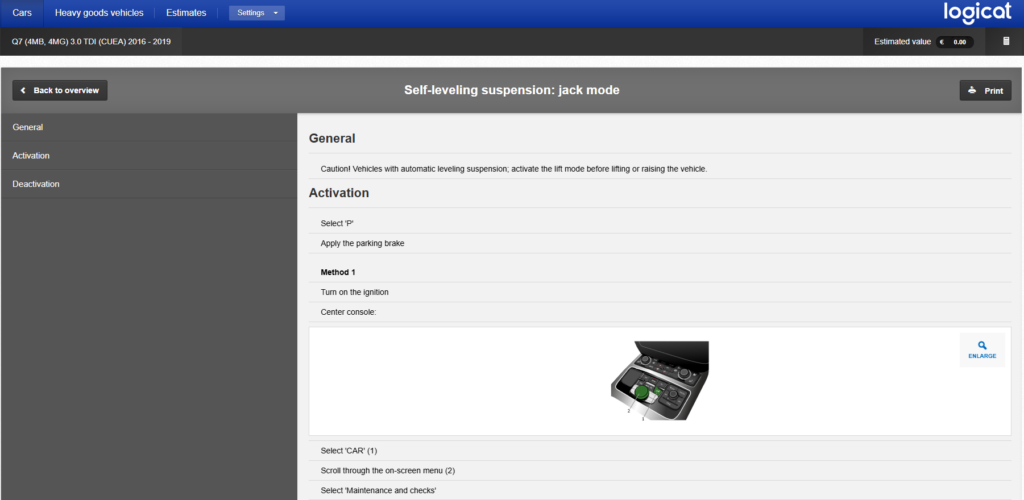
Diagnosis via HaynesPro
Access to the full Audi air suspension system diagram.
Manufacturer data:
OEM ride height per axle.
Exact calibration conditions:
Vehicle on a flat surface, correct tire pressure, battery stabilized above 12.5V.
Results
Rear height sensor recently replaced without recalibration.
No faults detected in the compressor or air springs.
Solution
Execution of OEM calibration procedure via diagnostic tool.
Entry of exact ride height values recommended by HaynesPro.
Calibration validation and fault code clearing.
Possible Solutions Based on Diagnosis
- Recalibration of height sensors
- Replacement of a faulty sensor
- Repair of an air leak
- Replacement of the air suspension compressor
- Replacement of an air spring
- Repair of wiring harness or connectors
- Software update of the suspension control module if recommended by the manufacturer
Adaptive air suspension requires extremely precise calibration procedures to ensure comfort, safety, and vehicle stability. With HaynesPro, technicians can quickly access OEM data, wiring diagrams, and manufacturer procedures required to perform accurate diagnostics and compliant calibration.
Try HaynesPro and access OEM data for all vehicle types.
Sources
Air suspension: benefits, maintenance, and common failures