

Gasoline Direct Injection (GDI) engines have become the standard in many modern vehicles thanks to their performance, fuel efficiency, and reduced emissions. However, this technology operates under extremely high pressures and requires highly precise electronic management. High-pressure injectors, HP pumps, rail pressure sensors, and stratified combustion strategies mean that even minor faults can cause engine misfires, increased fuel consumption, or power loss.
For workshops, diagnosing GDI systems has become far more complex than simply checking ignition or conventional fuel injection systems. WithHaynesPro, technicians gain access to OEM data, detailed wiring diagrams, manufacturer reference values, and guided procedures that allow them to quickly identify the root cause of failures and adopt a predictive maintenance approach before a major breakdown occurs.
Common Symptoms of a Faulty GDI System
The most common workshop symptoms include:
- Difficult hot starts
Residual pressure loss in the high-pressure circuit or leaking injector. - Engine misfires and unstable idle
Common fault codes: P0087, P0191, P0300, P0171, P228C. - Power loss during acceleration
Weak high-pressure pump performance or unstable rail pressure. - Check engine light illuminated
Combustion or fuel mixture deviations detected via lambda sensors. - Excessive fuel consumption
Poor injector spray pattern or excessive air/fuel mixture correction. - Carbon buildup on intake valves
A common issue on GDI engines due to the absence of fuel washing over intake valves. - Limp mode activation
ECU protection triggered by fuel pressure or combustion anomalies.
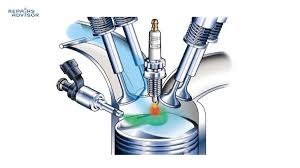
Step 1: Collecting Technical Data with HaynesPro
HaynesPro provides quick access to:
- Complete direct injection system diagrams
- OEM rail pressure values: idle, full load, start-up
- OEM fuel pressure testing procedures
- Torque specifications for high-pressure components
- Guided diagnostic strategies
- Precise location of sensors, pumps, and injectors
- Replacement and relearning procedures after repairs
OEM data is especially important on modern GDI systems where pressure tolerances are extremely tight.
Step 2: Expert Diagnosis of GDI Systems
- Real-time data analysis: Compare requested rail pressure with actual rail pressure to detect HP pump drift or a faulty injector.
- Fuel trim analysis: Monitor STFT/LTFT values to identify fuel mixture imbalances.
- High-pressure circuit inspection: Check:
- the high-pressure pump,
- the regulator,
- the rail pressure sensor,
- pressure variations during acceleration.
- Injector testing: Compare injection timing and perform cylinder balance tests.
- Intake carbon buildup inspection: Identify carbon deposits responsible for reduced engine efficiency.
- Electrical verification: Use HaynesPro wiring diagrams to check power supply, grounds, and GDI component signals.
- Post-repair validation: Clear adaptations, verify combustion parameters, and perform a dynamic road test.
HaynesPro Case Study: Peugeot 308 1.2 PureTech GDI
Symptoms
- Check engine light illuminated
- Power loss under heavy acceleration
- Intermittent hot misfires
- Fault code P0087 – Fuel pressure too low
Diagnosis via HaynesPro
Access to the complete direct injection system diagram.
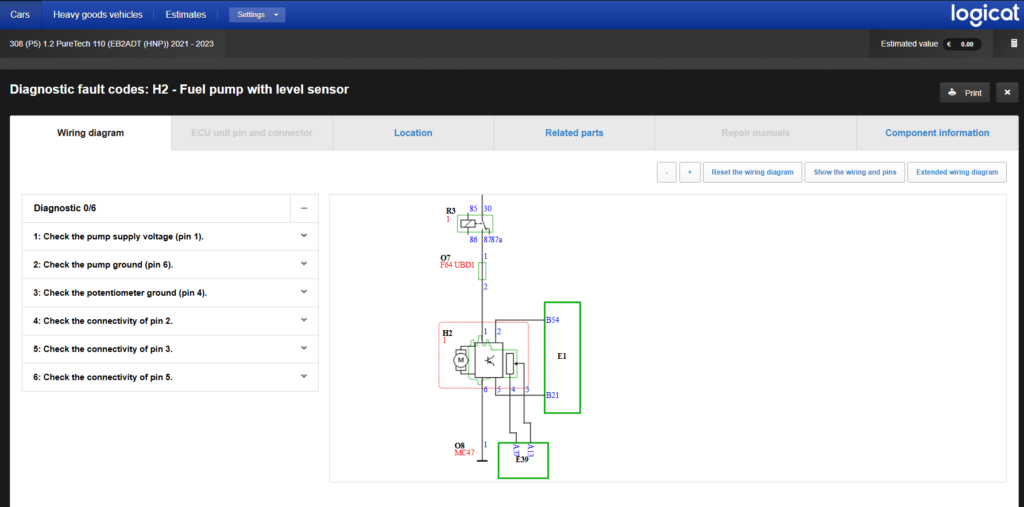
Manufacturer data:
- Nominal rail pressure at idle
- Rail pressure sensor tolerance values
- OEM HP pump flow test procedure
Results
- Rail pressure below manufacturer specifications
- Low-pressure pump operating correctly
- High-pressure pump losing efficiency when hot
Solution
- Replacement of the high-pressure pump
- Injector inspection following HaynesPro OEM procedures
- Fuel adaptation reset
- Validation through road testing
Possible Solutions Based on Diagnosis
- Intake system cleaning
- Replacement of a GDI injector
- Replacement of the high-pressure pump
- Replacement of the rail pressure sensor
- ECU software update
- Fuel adaptation reset
- Intake valve decarbonization
GDI direct injection systems provide excellent performance and efficiency, but they require a precise and methodical diagnostic approach. With HaynesPro, workshops gain rapid access to OEM data, wiring diagrams, and manufacturer procedures essential for identifying faults, reducing downtime, and implementing effective predictive maintenance.
Try HaynesPro and access OEM data for all vehicle types.
Sources
Understanding Problems with Automotive Gasoline Direct Injection (GDI)
OEM Gasoline Direct Injection Procedures