

ABS and ESP systems rely on accurate wheel speed information to monitor vehicle behaviour and support braking and stability functions. Wheel speed sensors measure the rotational speed of each wheel and transmit this information to the vehicle’s control systems.
When a wheel speed sensor-related fault occurs, symptoms can include an illuminated ABS or ESP warning light, stored fault codes, incorrect system intervention or the loss of related safety functions. However, a fault code pointing to a wheel speed sensor does not necessarily mean that the sensor itself has failed. Wiring problems, contamination, wheel bearing play or damage to the encoder ring can also affect the signal.
With HaynesPro, workshops can access vehicle-specific technical information to support the diagnostic process and identify the actual cause of the fault.
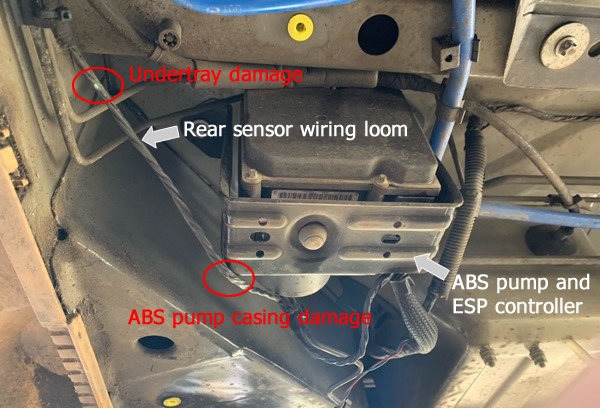
The Risks of Misdiagnosis
Wheel speed sensor faults can have several possible causes. Common issues include:
- Faulty or damaged wheel speed sensor;
- Damaged wiring or electrical connectors;
- Internal short circuits;
- Heavy contamination around the sensor;
- Excessive wheel bearing play;
- Damaged encoder or impulse ring;
- Incorrect sensor installation.
Replacing the sensor without checking the complete system can therefore lead to unnecessary parts replacement and fail to resolve the original fault.
Essential Checks Before Replacing an ABS Sensor
Before replacing a wheel speed sensor, technicians should check:
- Stored fault codes and diagnostic information;
- Live wheel speed values and signal behaviour;
- Sensor power supply and wiring;
- Connectors and cable condition;
- Wheel bearing play;
- Sensor installation point;
- Encoder or impulse ring for damage or contamination.
Comparing the signals from the different wheel speed sensors can help technicians identify abnormal readings and narrow down the source of the problem.
Using HaynesPro, technicians can access vehicle-specific technical information to support a structured diagnostic process rather than replacing components based solely on the fault code.
Workshop Case Study: ABS Warning Light on a BMW
Symptom
A BMW arrives at the workshop with the ABS warning light illuminated. The customer also reports that the stability control system is not operating normally.
Diagnosis
A diagnostic scan identifies a fault related to the rear wheel speed sensor.
Before replacing the sensor, the technician uses HaynesPro to access the relevant vehicle information and diagnostic procedures.
The technician then:
- Checks the stored fault code;
- Inspects the sensor wiring and connector;
- Compares the wheel speed readings;
- Checks the sensor installation point;
- Inspects the wheel bearing and encoder ring.
The inspection reveals a damaged sensor cable affecting the wheel speed signal.
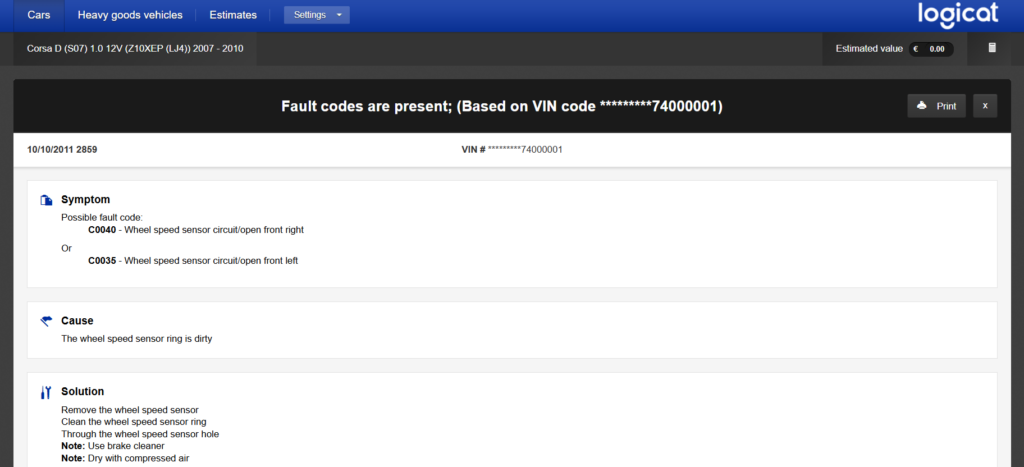
Result
- Damaged wiring identified;
- Unnecessary sensor replacement avoided;
- Fault repaired;
- Fault memory cleared;
- ABS/ESP system checked after the repair.
This type of structured diagnosis helps technicians identify the root cause of a wheel speed fault rather than replacing the component indicated by the fault code without further investigation.
HaynesPro Features That Support ABS and ESP Diagnostics
For ABS, ESP and wheel speed sensor diagnostics, HaynesPro provides access to vehicle-specific technical information that can help technicians:
- Access manufacturer repair and diagnostic information;
- Consult wiring diagrams;
- Locate relevant components and connections;
- Check technical specifications;
- Follow structured diagnostic procedures;
- Investigate known repair information with SmartFIX, where available.
These resources help workshops approach electronic braking and stability-system faults systematically.
Why Use HaynesPro for Wheel Speed Sensor Diagnostics?
HaynesPro enables workshops to:
- Quickly access vehicle-specific technical information;
- Support ABS and ESP fault diagnosis;
- Consult wiring diagrams and component locations;
- Follow manufacturer-based diagnostic procedures;
- Investigate possible causes before replacing components;
- Reduce unnecessary parts replacement;
- Improve diagnostic efficiency.
Modern ABS and ESP systems depend on multiple sensors and electronic components. A wheel speed sensor fault code is therefore only the starting point of the diagnosis.
By combining diagnostic equipment with reliable technical information, technicians can investigate the sensor, wiring, mechanical components and signal behaviour before carrying out a repair.
With HaynesPro, workshops have access to technical information designed to support accurate diagnosis and efficient repairs.
Discover HaynesPro and access the technical information you need to diagnose ABS, ESP and wheel speed sensor faults.