
The controlled alternator is an essential component of modern charging systems. Unlike a conventional charging system, its voltage and output are electronically controlled according to the battery’s condition, electrical demand and vehicle operating conditions. This intelligent management helps optimize energy consumption and Start-Stop system operation.
On many vehicles, the alternator regulator communicates with the ECU via the LIN bus, while an intelligent battery sensor (IBS) measures parameters such as battery voltage, current and temperature. A charging fault may therefore be caused by the alternator itself, but also by the regulator, IBS sensor, wiring or LIN communication.
With HaynesPro, workshops can access vehicle-specific technical information to follow a structured diagnostic procedure and identify the actual cause of the fault.
The Risks of Misdiagnosis
Smart charging system faults can have several causes. Common causes include:
- Faulty alternator regulator;
- Internal alternator fault;
- Damaged wiring or connector;
- LIN bus communication fault;
- Faulty intelligent battery sensor (IBS);
- Weak battery or poor battery health;
- Faulty alternator drive belt or overrunning pulley;
- Battery monitoring line fault.
The operation of a controlled alternator depends on information exchanged between several components in the system. The IBS sensor provides data such as battery voltage, current and temperature, while the ECU can adjust the charging demand according to operating conditions.
A charging voltage that appears low does not necessarily mean that the alternator is defective. On some vehicles equipped with intelligent energy management, charging voltage can intentionally vary according to the battery condition and driving conditions.
Replacing the alternator without checking the charging management system can therefore lead to an unnecessary and costly replacement.
Essential Checks Before Replacing a Controlled Alternator
Before replacing a component of the charging system, technicians should check:
- Fault codes stored in the ECUs;
- Battery voltage and state of charge;
- Requested and actual charging parameters;
- Alternator regulator operation;
- Wiring and connectors;
- LIN bus signal and communication;
- Values provided by the intelligent battery sensor;
- Condition of the alternator belt and overrunning pulley;
- Charging voltage behaviour at idle and at different engine speeds.
On modern systems, actual values may include engine speed, alternator load signal, battery state of charge and battery voltage. Checking the LIN bus with an oscilloscope can also help verify communication with the regulator.
With HaynesPro, technicians can access the vehicle-specific technical information required to perform these checks and follow the appropriate diagnostic procedures.
Workshop Case Study: Charging Fault on a Vehicle with a Controlled Alternator
Symptom
Diagnosis
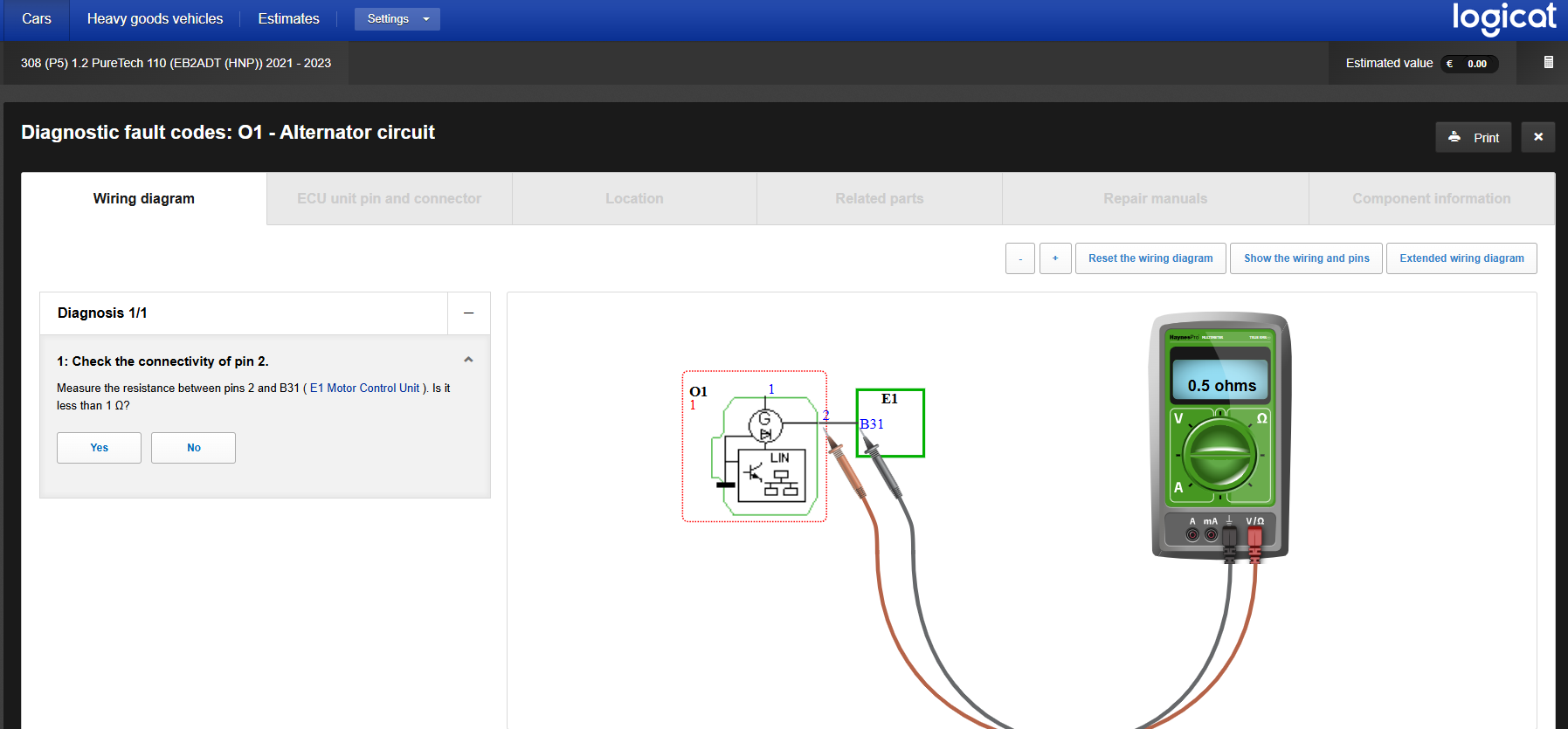
Before replacing the alternator directly, the technician consults the vehicle-specific technical information available through HaynesPro.
They check in particular:
- Stored fault codes;
- Battery voltage;
- Battery state of charge;
- Requested and actual charging values;
- Alternator regulator operation;
- Wiring and connections;
- Communication between the ECU and alternator.
Checking the parameters helps determine whether the fault actually concerns charging output or originates from another part of the intelligent energy management system.
Result
The diagnostic process identifies the source of the fault before the alternator is replaced.
HaynesPro Features That Support Smart Charging System Diagnostics
- Manufacturer diagnostic and repair procedures;
- Wiring diagrams;
- Component locations;
- Technical specifications and data;
- Information required for charging system checks;
- SmartFIX, where available, to identify known faults and their repair solutions.
This information allows workshops to follow a structured diagnostic method and check the entire system before replacing a component.
By combining diagnostic equipment with reliable technical information, technicians can check the battery, alternator, regulator, IBS sensor, wiring and LIN communication to identify the root cause of the fault.
With HaynesPro, workshops have access to the technical information needed to support smart charging system diagnostics and carry out more accurate repairs.
Discover HaynesPro and access the technical information needed to diagnose controlled alternator and smart charging system faults.