

Electric Power Steering (EPS) has become the standard on most modern vehicles. Lighter, more energy-efficient, and fully compatible with Advanced Driver Assistance Systems (ADAS), EPS is gradually replacing traditional hydraulic power steering systems. However, diagnosing EPS faults is more complex, as it involves multiple control modules, sensors, and electronic communication networks.
When a driver reports heavy steering, intermittent power assistance, or an illuminated power steering warning light, it is essential to follow a structured diagnostic procedure before replacing any components. With HaynesPro, workshops have access to wiring diagrams, component locations, manufacturer specifications, technical service bulletins, and diagnostic procedures to quickly identify the root cause of the fault.
Risks of Incorrect Diagnosis
A loss of power steering assistance does not necessarily mean that the steering rack or electric motor has failed. Several issues can produce the same symptoms, including:
- A low battery state of charge.
- An alternator not supplying the correct charging voltage.
- A faulty steering angle sensor.
- A CAN bus communication fault.
- A defective fuse or relay.
- A corroded electrical connector.
- A software update required by the manufacturer.
Replacing the steering rack or steering column prematurely can be extremely expensive and may not resolve the fault.
Essential Checks Before Diagnosis
Before starting any repair, it is recommended to inspect:
- The battery state of charge.
- Charging voltage with the engine running.
- Diagnostic trouble codes (DTCs) stored in the EPS, ABS, and engine control modules.
- Power supply and ground circuits.
- The condition of electrical connectors.
- Available manufacturer technical service bulletins (TSBs).
The wiring diagrams and manufacturer procedures available in HaynesPro allow technicians to verify every circuit quickly before deciding to replace any components.
Workshop Case Study: Intermittent Power Steering Assistance Loss on a Peugeot 308
Symptom
A Peugeot 308 arrives at the workshop with intermittent heavy steering. The EPS warning light occasionally illuminates and disappears after the engine is restarted.
Diagnosis
A fault code scan reveals a communication fault with the electric power steering control module.
Using HaynesPro, the technician accesses:
- The EPS system wiring diagram.
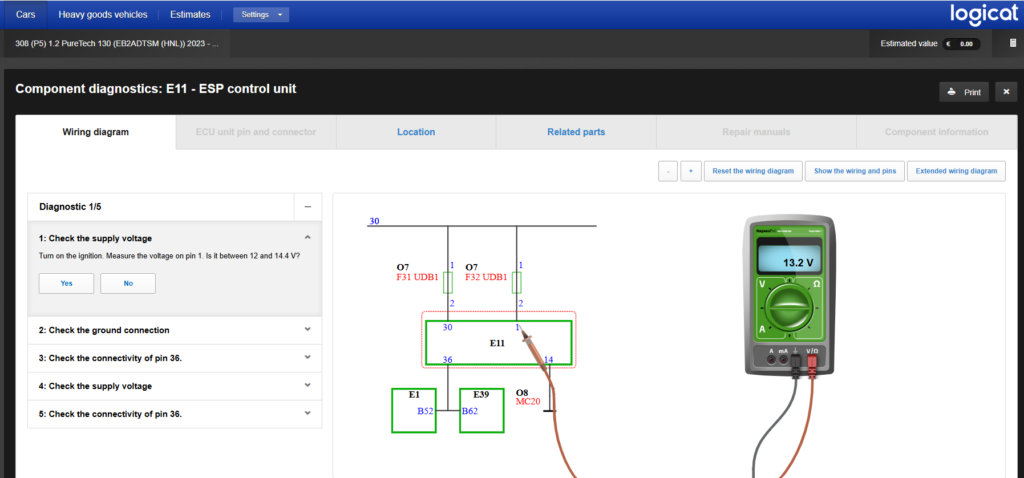
- Fuse and ground point locations.
- Control module connector locations.
- Manufacturer technical service bulletins relating to the vehicle.
The diagnostic checks rule out a steering rack failure. After inspecting the wiring harness, corrosion is found on a power supply connector located near the battery.
Result
- Wiring harness repaired.
- Fault codes cleared.
- Power steering assistance fully restored.
- No steering rack replacement required.
- Lower repair costs for the customer.
HaynesPro Features That Support EPS Diagnosis
For Electric Power Steering systems, HaynesPro provides:
- Detailed wiring diagrams.
- Locations of control modules, fuses, relays, and connectors.
- Manufacturer testing specifications.
- Step-by-step diagnostic procedures.
- Technical component illustrations.
- Manufacturer technical service bulletins.
- SmartFIX, highlighting common faults and proven repair solutions.
These resources help workshops reduce diagnostic time and avoid replacing expensive components unnecessarily.
Best Practices for Technicians
Before replacing any EPS component, technicians should:
- Check the battery condition and charging system.
- Read all diagnostic trouble codes from the relevant control modules.
- Verify power supplies, grounds, and fuses.
- Inspect connectors and the wiring harness.
- Review available manufacturer technical service bulletins.
- Follow the recommended manufacturer diagnostic procedure before replacing any component.
- Perform steering angle sensor calibration after repairs when required.
Why Use HaynesPro for EPS Diagnostics?
HaynesPro helps workshops to:
- Quickly access manufacturer repair procedures.
- Consult complete wiring diagrams.
- Locate system components rapidly.
- Identify recurring faults using SmartFIX.
- Reduce diagnostic time.
- Avoid unnecessary replacement of steering racks or steering columns.
As Electric Power Steering systems become increasingly sophisticated, having access to reliable technical documentation is essential for accurate diagnostics and more profitable repairs.
Electric Power Steering faults are not always caused by mechanical failures. In many cases, the root cause lies in the electrical supply, a faulty sensor, or a communication issue between electronic control modules. A structured diagnostic approach is therefore essential to avoid unnecessary and costly repairs.
With HaynesPro, automotive repair professionals have access to all the technical information required to diagnose EPS systems efficiently, including wiring diagrams, manufacturer procedures, component locations, technical service bulletins, and SmartFIX. The result is faster diagnostics, more reliable repairs, and improved customer satisfaction.
Discover HaynesPro and access comprehensive technical documentation for Electric Power Steering system diagnostics.