
Gasoline Direct Injection (GDI) systems are now widely used in modern petrol engines. Unlike indirect injection systems, GDI injectors deliver fuel directly into the combustion chamber and operate as part of a high-pressure fuel system.
With HaynesPro, workshops can access manufacturer diagnostic procedures, wiring diagrams, component locations, technical specifications, Technical Service Bulletins and SmartFIX to help identify the root cause of GDI injection faults.
The Risks of Misdiagnosis
An injection fault can have several possible causes. Replacing an injector without checking the rest of the system can therefore lead to unnecessary costs and may not resolve the original problem.
Common causes include:
- Blocked or restricted GDI injector;
- Injector leakage;
- Faulty injector coil or control circuit;
- Damaged wiring or electrical connector;
- Insufficient fuel pressure;
- High-pressure fuel pump fault;
- Faulty fuel rail pressure sensor;
- Contaminated fuel;
- Misfires caused by incorrect fuel delivery.
In a GDI system, fuel pressure and injector operation are closely linked. Diagnostic checks should therefore be carried out according to the manufacturer’s procedures and with the appropriate precautions for high-pressure fuel systems.
Essential Checks Before Diagnosis
Before replacing a GDI injector, technicians should check:
- Fault codes stored in the engine control unit;
- Freeze Frame data;
- Requested and actual fuel pressure;
- Low-pressure fuel pump operation;
- High-pressure fuel pump output;
- Injector electrical control signals;
- Wiring and connector condition;
- Fuel trim values;
- Misfires by individual cylinder.
These checks help technicians distinguish an injector fault from a problem elsewhere in the fuel supply or engine management system.
Workshop Case Study: Misfire on a GDI Petrol Engine
Symptom
A vehicle equipped with a GDI petrol engine arrives at the workshop with the engine warning light illuminated. The customer also reports unstable idling and a loss of power during acceleration.
Diagnosis
A diagnostic scan identifies a misfire associated with one specific cylinder.
Before replacing the injector, the technician uses HaynesPro to access:
- The injection system wiring diagram;
- Injector and fuel rail locations;
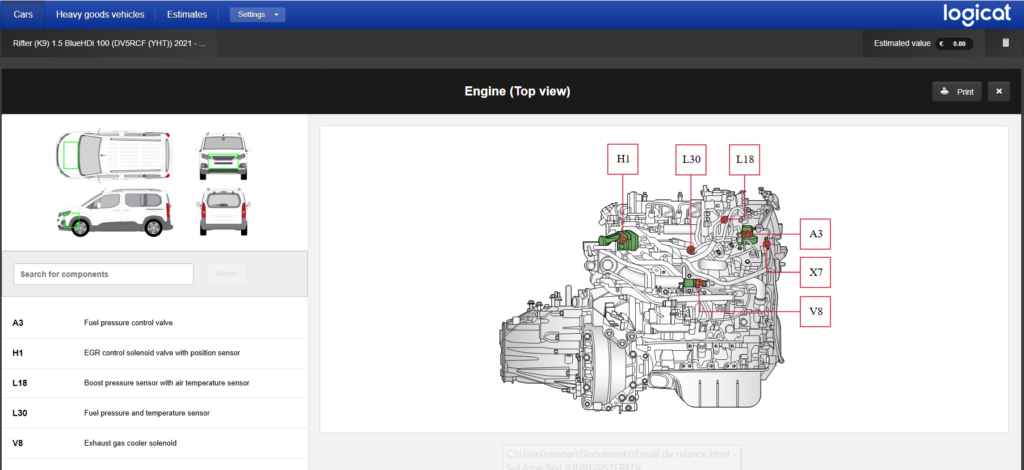
- The injector testing procedure;
- Manufacturer technical specifications;
- Procedures related to misfire fault codes;
- SmartFIX to check for known recurring faults.
The technician first checks the electrical supply, wiring and fuel pressure. The measured fuel pressure is within the specified range, initially ruling out a high-pressure generation problem.
The injector control signal is also correct. However, a comparison of cylinder operation identifies a difference in fuel delivery.
The diagnostic process therefore points towards a malfunctioning GDI injector.
Solution
The defective injector is replaced according to the manufacturer’s procedure. Where required by the vehicle system, injector coding or adaptation is then carried out.
Result
- Misfire eliminated;
- Engine idle stabilised;
- Engine performance restored;
- Engine warning light cleared after repair validation;
- Defective component replaced directly;
- Unnecessary high-pressure fuel pump replacement avoided.
HaynesPro Features That Simplify GDI Injector Diagnostics
For direct petrol injection systems, HaynesPro provides access to:
- Detailed wiring diagrams;
- Injector, sensor and control unit locations;
- Manufacturer diagnostic procedures;
- Technical values and specifications;
- Component testing procedures;
- Technical Service Bulletins;
- SmartFIX, helping technicians identify known faults and repair solutions.
This information enables technicians to follow a structured diagnostic process before replacing an injector or another fuel system component.
Best Practices for Technicians
Before replacing a GDI injector, technicians should:
- Read all stored fault codes;
- Analyse Freeze Frame data;
- Compare requested and actual fuel pressure;
- Check electrical supply and wiring;
- Verify injector control signals;
- Compare the operation of individual cylinders;
- Check for possible injector leakage;
- Verify manufacturer technical specifications;
- Carry out injector coding or adaptation when required;
- Follow the manufacturer’s diagnostic procedure before replacing any component.
High-pressure fuel system work must always be carried out in accordance with the manufacturer’s safety instructions and repair procedures.
Why Use HaynesPro for GDI System Diagnostics?
HaynesPro enables workshops to:
- Quickly access manufacturer diagnostic procedures;
- View injection system wiring diagrams;
- Locate injectors, sensors and control units;
- Check technical values and component testing procedures;
- Use SmartFIX to identify known recurring faults;
- Reduce time spent searching for technical information;
- Avoid unnecessary component replacement;
- Improve diagnostic accuracy.
On GDI systems, where injectors, the high-pressure fuel pump, fuel rail, sensors and engine control unit operate together, access to vehicle-specific technical information is essential for accurately identifying the root cause of a fault.
Conclusion
An injection fault on a GDI petrol engine should not automatically be attributed to a faulty injector. Incorrect fuel pressure, a high-pressure fuel pump problem, an electrical fault or an injector control issue can produce similar symptoms.
A structured diagnostic approach allows technicians to test each part of the system before deciding which component needs to be replaced. With HaynesPro, workshops have access to manufacturer procedures, wiring diagrams, component locations, technical data, Technical Service Bulletins and SmartFIX to carry out faster and more accurate diagnostics.
Discover HaynesPro and access comprehensive technical information for diagnosing GDI petrol injection systems and improving workshop efficiency.