

MAF (Mass Air Flow) and MAP (Manifold Absolute Pressure) sensors are two key components of the engine management system. When they send inconsistent or incorrect information, the engine may experience a loss of power, excessive fuel consumption, smoke, or even enter limp mode.
Misinterpreting their symptoms often leads to replacing the wrong part. Thanks to expert tools like HaynesPro, mechanics can analyze actual values, compare MAF and MAP readings, check known faults, and perform a reliable, fast and structured diagnosis.
Symptoms of a failing MAF or MAP sensor
Identifying the signs of a faulty MAF or MAP sensor is essential to avoid unnecessary replacements. Here are the most common symptoms:
- Loss of power or sluggish acceleration
- Black smoke (diesel) or rich mixture
- Unstable idle or jerking
- Limp mode / Check Engine Light (MIL)
- Excessive fuel consumption or fuel smell
- Inconsistent intake pressure
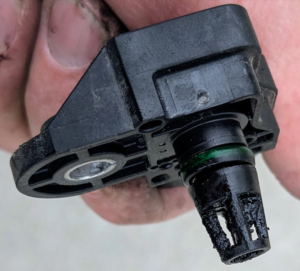
Step 1: Data collection with HaynesPro
HaynesPro provides access to essential information for a reliable MAF/MAP diagnosis:
✔ Manufacturer values for MAF and MAP
Expected idle airflow, load readings, allowable pressures, air temperatures, etc.
✔ Sensor wiring diagrams
Allows quick checking of power supply, ground and signal.
✔ SmartCASE™: known MAF/MAP failures
Feedback collected from thousands of vehicles:
- Clogged MAF on DV6 engines
- MAP blocked by EGR deposits
- Cracked turbo hose between MAF and MAP
✔ SmartFIX™: OEM technical bulletins
ECU reprogramming, component updates, revised specifications.
Thanks to this data, the mechanic can quickly verify whether the sensors operate within manufacturer tolerances or if the issue comes from another component (EGR, turbo, hose, filter…).
Step 2: Expert diagnosis
Here is the recommended method to distinguish a failing MAF from a failing MAP and interpret inconsistent readings.
1. Read live data
Compare the following values:
- MAF at idle and under load
- MAP pressure with ignition ON
- Turbo pressure under load
- EGR position
- Intake air temperature (IAT)
➡ An inconsistency between MAF and MAP is a strong indicator of a fault or an air leak.
2. Check intake system tightness
Hoses between MAF → turbo → intercooler → MAP are often the culprits.
A small crack can trigger codes P0101 or P0238.
3. Inspect the EGR valve
A stuck-open EGR valve will distort both MAF and MAP readings.
This case is frequently shown in HaynesPro SmartCASE™.
4. Compare MAF/MAP values
| Symptom | MAF | MAP | Conclusion |
| Low idle + correct pressure | ❌ | ✔ | Faulty MAF |
| Correct airflow + low MAP | ✔ | ❌ | Clogged MAP or leak |
| Both inconsistent | ❌ | ❌ | Major leak / turbo hose |
| MAP too high | ✔ | ❌ | MAP short circuit |
Step 3: Possible solutions
✔ Clean or replace the MAF: essential if oily deposits or unstable readings are present.
✔ Clean the MAP: often clogged due to EGR recirculation.
✔ Check/replace turbo hoses: very common cause of inconsistent values.
✔ Test and check EGR: a stuck EGR affects both sensors simultaneously.
✔ ECU reprogramming or adaptation reset: some known issues require OEM updates (SmartFIX™).
HaynesPro Case Study: Peugeot 308 1.6 HDi – MAF/MAP inconsistency
Symptoms:
- Loss of power
- Check engine light
- Black smoke
- Intermittent limp mode
OBD fault codes:
- P0101 (MAF)
- P0238 (MAP)
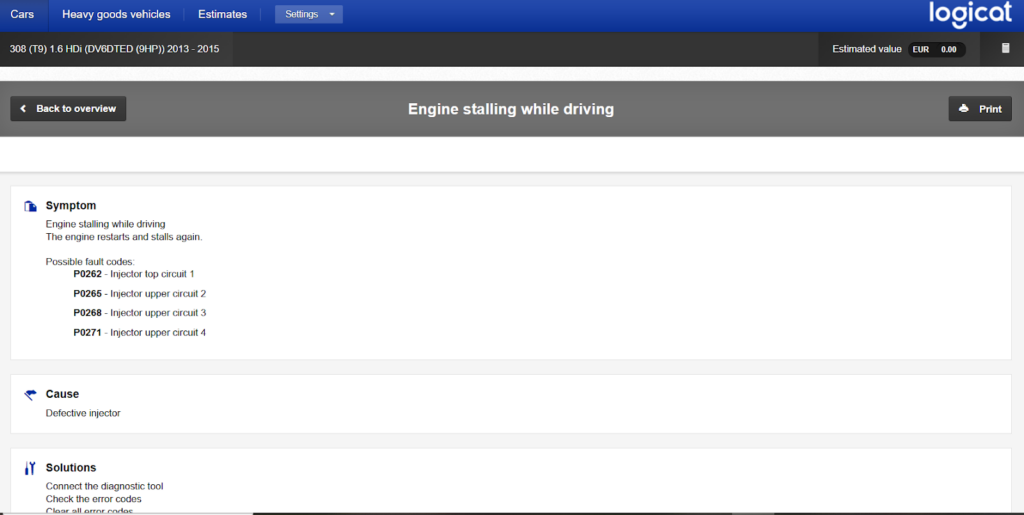
HaynesPro SmartCASE™ analysis:
Common cases on DV6 engines:
- Under-reading MAF due to contamination
- MAP blocked by EGR residue
- Micro-cracked intercooler hose
➡ Inspection: MAF covered with an oily deposit.
HaynesPro solution:
- MAF replacement
- MAP cleaning
- Hose inspection
- ECU adaptation reset
Result:
- MAF values returned to normal
- No more black smoke
- Restored engine power
- No warning lights
➡ Accurate and fast diagnosis thanks to the cross-analysis of MAF/MAP data.
Want to diagnose vehicles like an expert?
Try HaynesPro for free today and access all OEM data, technical diagrams and diagnostic procedures.