
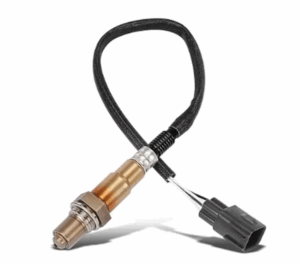
Modern direct injection (GDI) and turbo petrol engines require precise control of the air/fuel ratio (AFR). To achieve this, manufacturers use wideband (UEGO) lambda sensors, which allow much finer regulation than a conventional narrowband lambda sensor.
A faulty wideband sensor can cause:
- Excessive fuel consumption
- Loss of power
- Engine misfires
- Limp mode
- Excessive emissions
- LSPI risks (in turbo GDI engines)
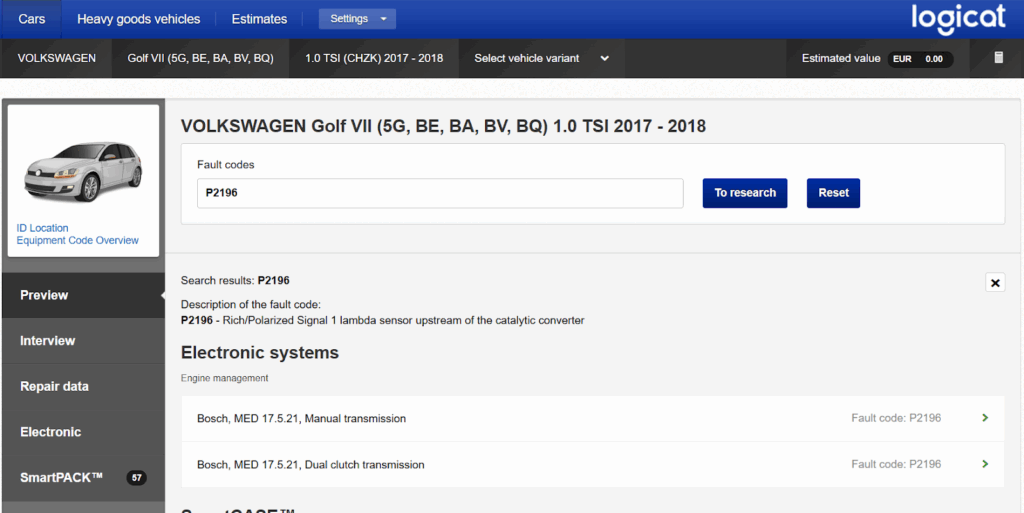
Thanks to HaynesPro, technicians have access to manufacturer data, normal value ranges, and the necessary electrical diagrams for reliable diagnostics.
What is a Wideband Lambda Sensor?
A wideband lambda sensor measures the AFR (Air-Fuel Ratio) accurately over a wide range, unlike narrowband sensors.
Benefits:
- Accurate AFR measurement
- Better fuel injection management
- Optimization of catalytic converter & DPF
- Prevention of knocking / LSPI
Symptoms of a Faulty Wideband Sensor
| Observed Signs | Consequence |
| Unstable idle | Incorrect AFR |
| Loss of power | Poor injection correction |
| Excessive fuel consumption | ECU safety enrichment |
| Check engine light (P013x, P017x, P2195) | Sensor fault / lean-rich mixture |
| Petrol smell | Too rich mixture |
Key Data to Analyze with HaynesPro
Parameters:
- Target AFR vs measured AFR
- STFT / LTFT (Short-term / Long-term Fuel Trim)
- UEGO signal
- Heater voltage
- Acceleration/deceleration response curve
Technical Rule:
AFR deviation (target vs measured) > ±10% = probable anomaly
HaynesPro Case Study
Model: Volkswagen Golf 7 1.4 TSI EA211 — 2018
Customer Symptoms:
- Increased fuel consumption
- Loss of torque
- Check engine light after heavy load
OBD Fault Codes:
- P2196 — O2 sensor bank 1, sensor 1 stuck rich
- P0172 — Rich mixture
Measured Values vs Manufacturer Reference:
| Parameter | Measured | Manufacturer Reference* |
| Target AFR | 14.7 | 14.7 |
| Measured AFR | 13.4–13.8 | ±0.1 |
| LTFT | −14% | ±5–10% |
| Response | Slow | Fast |
*Values accessed via HaynesPro
Workshop Checks:
- No exhaust leaks ✅
- No air intake leaks ✅
- Fuel pressure correct ✅
Upstream wideband lambda sensor faulty
Intervention:
Final Diagnosis:
- Replace sensor
- Reset injection adaptations
- Road test + AFR check
Result:
| Parameter | Before | After |
| LTFT | −14% | −2% |
| AFR | ~13.5 | 14.7 |
| Symptoms | Present | Resolved ✅ |
- Compare target vs measured AFR
- Check exhaust, intake, MAF sensor
- Analyze LTFT / STFT
- Test sensor when hot and under load
Wideband lambda sensors are essential for modern engines.
With HaynesPro, mechanics can:
– Access manufacturer values
– Read wiring diagrams and pin-outs
– Follow testing procedures
– Make reliable and fast diagnoses
Improve engine diagnostics and save workshop time.
Access manufacturer data with HaynesPro:
Try HaynesPro for free :